




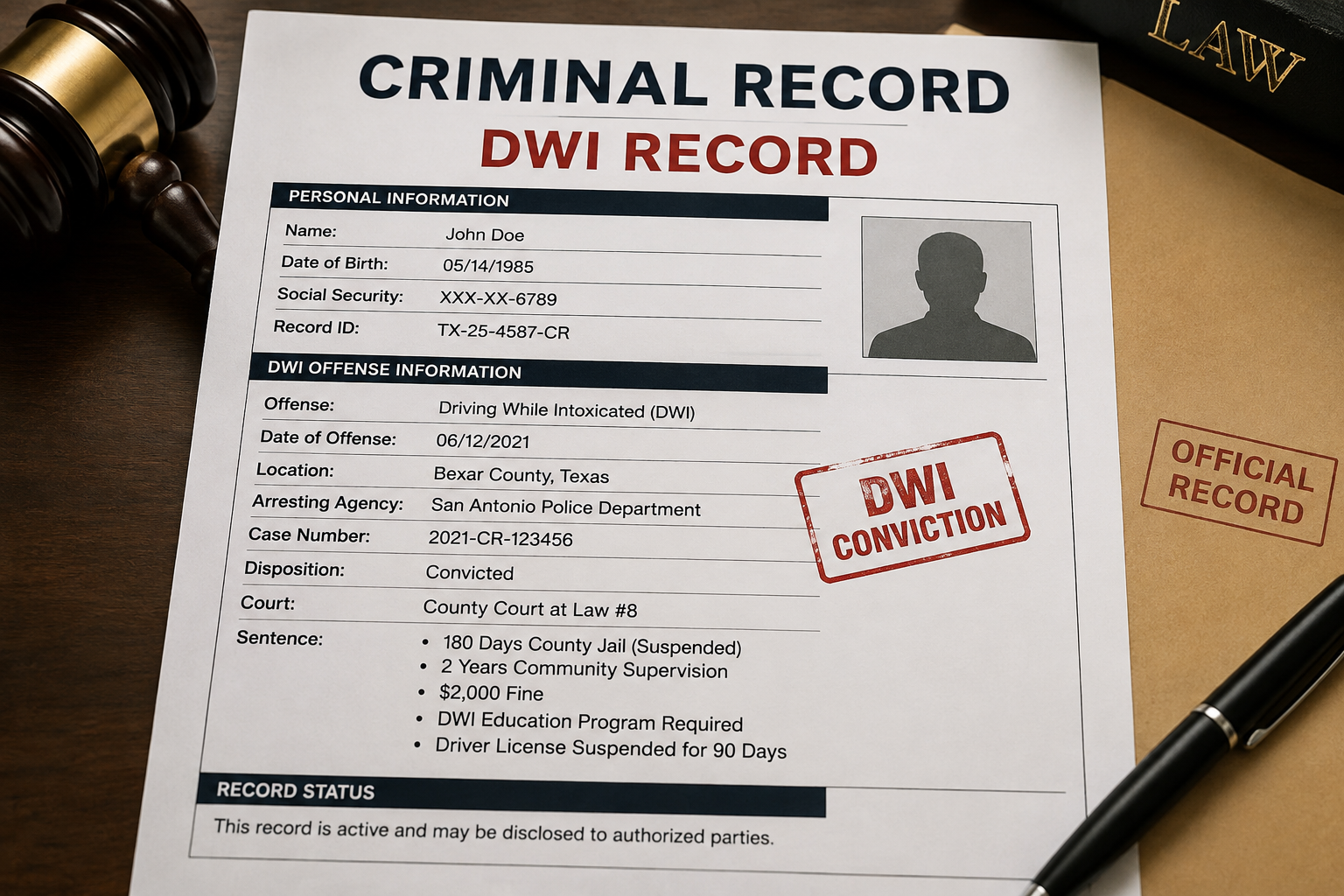
A DWI charge does not necessarily end when the case is over. Can You Expunge or Seal a DWI Record in Texas? is a common question for individuals who want to move forward after a DWI arrest or conviction. Even after completing probation, paying fines, or satisfying other court requirements, a DWI record can continue to affect employment opportunities, professional licensing, housing applications, and educational pursuits. Understanding whether you qualify for an expunction or an order of nondisclosure is an important step toward protecting your future.
The good news is that some Texas DWI records may qualify for expunction or nondisclosure. The rules are specific, however, and the difference between the two remedies matters.
What Is the Difference Between Expunction and Nondisclosure?
Expunction, also called expungement, is the more complete form of record clearing. When an eligible record is expunged, the law provides for the destruction or removal of records relating to the arrest or case, subject to the applicable legal process.
Nondisclosure, often referred to as record sealing, works differently. Instead of destroying the record, it restricts public access to it. Certain government agencies, law enforcement authorities, and other entities may still be permitted to access the information.
That distinction is important when deciding what relief may be available.
Can a DWI Be Expunged in Texas?
In general, a DWI conviction cannot simply be erased from your record through expunction. However, certain circumstances may make an arrest or charge eligible.
According to the source material, possible situations include:
- You were arrested for DWI but acquitted.
- You were arrested but never charged.
- The DWI charge was dismissed without resulting in a conviction or community supervision.
- The charge was reduced and later dismissed.
- You were convicted but later pardoned.
- A conviction was subsequently overturned or otherwise resolved in your favor under the circumstances recognized by law.
A guilty plea or conviction generally creates a significant barrier to expunction. The source material also notes that deferred adjudication does not automatically make a DWI eligible for expunction, although other forms of record relief may be available.
This is why reviewing the exact history of your case matters.

What Is Nondisclosure for a DWI?
Nondisclosure allows certain eligible criminal records to be sealed from general public access.
Texas law changed the landscape for some first-time DWI offenders through legislation commonly associated with the Second Chance Law. Under the eligibility requirements described in the source material, certain first-time DWI convictions may qualify for an order of nondisclosure.
Potential requirements include:
- The DWI was a first offense.
- The person’s BAC was below 0.15.
- The incident did not involve an accident with another person.
- There are no disqualifying prior convictions or deferred adjudications.
- All court-ordered requirements have been completed.
- Any applicable waiting period has passed.
These requirements are not optional. Missing one can affect eligibility, which is why an attorney should review the complete record before you assume you qualify.
How Long Does a DWI Stay on Your Record?
A DWI does not necessarily disappear simply because years have passed.
The source material explains that a DWI conviction can remain on the Texas criminal record indefinitely without legal action. It also points out that the criminal record and administrative driving record are separate matters.
This distinction can be easy to overlook.
Addressing the criminal record does not necessarily eliminate every administrative consequence associated with a DWI. If you are trying to put the matter behind you, it is worth understanding what appears on each record and what type of relief actually addresses it.
How Does the Texas Expunction Process Work?
If you believe your DWI record qualifies for expunction, the process generally begins with filing a Petition for Expunction in the appropriate district court.
The petition must contain identifying information and details about the arrest and case, including information about the arresting agency, arrest date, charges, court and case numbers, and the location of the arrest.
After the petition is filed, the court may schedule a hearing. Relevant agencies and the prosecutor may receive notice and have an opportunity to respond. If the court determines that the legal requirements have been satisfied, it may grant the expunction.
Because the process involves several agencies and specific procedural requirements, filing the right paperwork is only part of the job.
How Does DWI Nondisclosure Work?
For eligible first-time DWI offenders, nondisclosure can provide an important second chance.
The source material identifies waiting periods that may apply depending on whether an ignition interlock device was used. It describes a two-year waiting period after completion of the sentence when an interlock was used for at least six months, and a five-year period when an interlock was not used.
Once an order of nondisclosure is granted, the record is generally hidden from public view, although certain government and law enforcement agencies may still have access.
What If Your DWI Case Has Not Been Resolved?
If you are currently facing DWI charges, record clearing may not be the first issue you should address.
The outcome of the underlying case can have a major effect on your future options. Depending on the circumstances, potential defenses may involve questions about the traffic stop, probable cause, field sobriety testing, breath or blood testing, or whether the prosecution has sufficient evidence to prove the charge.
In some cases, negotiating a reduction may also be possible. The source material identifies offenses such as reckless driving, obstruction of a highway, and public intoxication as examples of potentially reduced charges.
The best time to discuss record-clearing options may be before you enter a plea or resolve your case, not years afterward.
Final Thoughts on Can You Expunge or Seal a DWI Record in Texas?
A DWI can follow you long after the court case has ended. But having a DWI arrest or conviction does not necessarily mean you have no options.
For some Texans, expunction may be available. For others, nondisclosure may provide a way to limit public access to an old DWI record. The right option depends on how the case ended, your criminal history, the circumstances surrounding the offense, and whether you meet the requirements under Texas law.
The important thing is not to assume.
Need Help Clearing a DWI Record in Texas?
At Abii & Associates, we understand that a past DWI can continue to create problems long after you thought the matter was behind you. Our legal team can review your criminal history, examine how your DWI case was resolved, and help determine whether you may qualify for expunction or nondisclosure.
If you are currently facing DWI charges, we can also help you understand your defense options before a decision is made that could affect your record for years to come.