




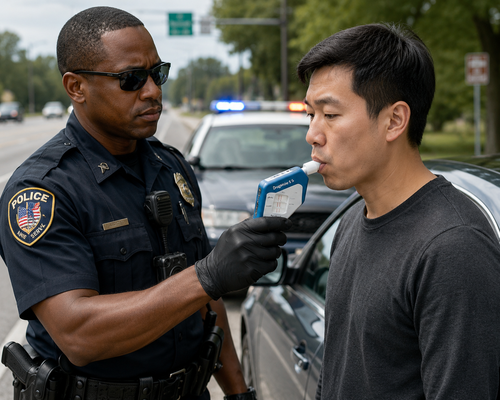
Seeing a breathalyzer result above the legal limit can feel like the case is already over. I Failed the Breathalyzer. Is My Texas DWI Case Already Lost? is one of the first questions many drivers ask after an arrest. While a failed breath test can be important evidence, it does not automatically result in a conviction. Many Texas DWI cases involve legal and factual issues that may affect whether the breath test results can be challenged and how the case is ultimately resolved.
It doesn’t.
While a breath test is an important piece of evidence, it is not the final word in a Texas DWI case. Prosecutors still have the burden of proving their case beyond a reasonable doubt, and breathalyzer results can be challenged for a variety of legal and scientific reasons.
If you’ve been arrested for DWI after failing a breath test, understanding your options before making assumptions could make a significant difference in the outcome of your case.
A Failed Breath Test Does Not Equal an Automatic Conviction
Texas law considers a blood alcohol concentration (BAC) of 0.08% or higher to be over the legal limit for most drivers. However, the breathalyzer reading alone does not determine guilt.
The prosecution must still establish that:
- The traffic stop was lawful.
- The arresting officer had probable cause to arrest you.
- The breath test was properly administered.
- The testing equipment was functioning correctly.
- The evidence presented is reliable and legally admissible.
If any part of that process is flawed, your attorney may have grounds to challenge the evidence or even seek dismissal of key portions of the case.
Breathalyzers Are Not Perfect
Despite their widespread use, breath-testing devices are not infallible. Like any scientific instrument, they require strict maintenance, calibration, and proper operation.
Several factors can affect the accuracy of a breathalyzer reading, including:
- Improper calibration or maintenance of the machine.
- Operator error during testing.
- Medical conditions such as acid reflux or diabetes.
- Residual alcohol remaining in the mouth.
- Certain medications or substances can interfere with the reading.
- Failure to follow the required observation procedures before testing.
A reading may appear accurate on paper while still producing an unreliable result under closer legal scrutiny.

Every Step of the Arrest Matters
A breath test is only one part of a DWI investigation.
An experienced defense attorney will carefully review every stage of the encounter, including:
- Why did the officer initiate the traffic stop?
- Whether field sobriety tests were administered correctly.
- How the arrest decision was made.
- Whether your constitutional rights were respected.
- How the breath sample was collected and analyzed.
Sometimes the strongest defense has little to do with the breathalyzer itself and everything to do with procedural mistakes made before the test was ever administered.
The Importance of the First 15 Days
Many people focus entirely on the criminal charge and overlook another critical issue: their driver’s license.
After most Texas DWI arrests, you have only 15 days to request an Administrative License Revocation (ALR) hearing to challenge the suspension of your driving privileges. Missing that deadline can result in an automatic license suspension, regardless of what eventually happens in your criminal case.
The ALR hearing also provides an early opportunity for your attorney to:
- Question the arresting officer under oath.
- Obtain valuable evidence.
- Examine police reports and testing procedures.
- Identify weaknesses that may later strengthen your criminal defense.
Acting quickly preserves opportunities that may disappear once the deadline passes.
Can Breath Test Results Be Challenged?
Yes.
Successful DWI defenses often involve carefully examining the reliability and admissibility of chemical test evidence.
Depending on the facts of the case, your attorney may investigate:
- Whether the breathalyzer was properly calibrated.
- Whether maintenance records reveal recurring problems.
- Whether the officer was certified to administer the test.
- Whether the required testing procedures were followed.
- Whether outside factors could have influenced the result.
In some cases, prosecutors rely heavily on the breath test. If that evidence becomes unreliable or inadmissible, the entire case can become significantly weaker.
A High BAC Doesn’t Eliminate Your Legal Rights
It’s common for people to believe they should simply plead guilty because the breathalyzer showed a high reading. That assumption can be costly.
Every DWI case is unique. Even when chemical test results appear unfavorable, legal issues involving evidence collection, constitutional protections, police procedure, or forensic reliability may dramatically change the direction of a case.
The outcome depends on far more than a single number printed on a report.
Why Early Legal Representation Makes a Difference
Time is one of your most valuable assets after a DWI arrest. Evidence must be preserved. Deadlines must be met. Police reports, body-camera footage, maintenance records, and witness statements should be reviewed before critical information becomes harder to obtain. Waiting several weeks before speaking with a lawyer can unnecessarily limit your legal options.
An experienced DWI attorney begins building your defense immediately, not after the prosecution has already built theirs.
Let Abii & Associates Fight for Your Future
A failed breathalyzer should never be viewed as the end of your case.
At Abii & Associates, we understand that every DWI arrest deserves a careful legal review, not assumptions based on a machine reading. Our attorneys examine every detail, from the legality of the traffic stop to the administration of the breath test and the evidence prosecutors intend to present in court.
If law enforcement failed to follow proper procedures, if the testing equipment was unreliable, or if your rights were violated at any stage of the investigation, we will aggressively pursue every available legal avenue to protect your interests.
A DWI conviction can affect your career, finances, driver’s license, and future opportunities. You deserve a defense that is thorough, strategic, and focused on achieving the best possible outcome.
Don’t wait until deadlines have passed or evidence becomes harder to challenge. Contact Abii & Associates today to schedule a confidential consultation. The sooner we begin evaluating your case, the sooner we can begin protecting your rights and building your defense.
Final Thoughts on I Failed the Breathalyzer. Is My Texas DWI Case Already Lost?
Failing a breathalyzer may feel overwhelming, but it is not the same as being convicted.
A breath test is simply one piece of evidence, one that must withstand legal scrutiny before it can determine the outcome of your case. The circumstances surrounding your arrest, the actions of law enforcement, the reliability of the testing process, and the strength of the prosecution’s evidence all matter.
If you’ve been arrested for DWI in Texas, don’t assume the result is inevitable. Seek experienced legal guidance, understand your rights, and take action while your options remain open. The decisions you make today could shape the outcome of your case for years to come.